









Constitutional Grounds for the New California State Movement
Updated: Sep 16

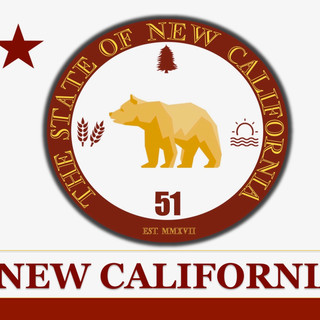
The debate over dividing the most populous state in the nation has evolved from political rhetoric into a serious legal inquiry. When examining the constitutional grounds for dividing California, scholars and legal experts often look back to the foundational mechanisms established during the admission of states to the Union. California spans over 160,000 square miles, housing nearly 39 million residents across dramatically divergent economic, geographic, and cultural landscapes. This sheer scale creates immense governance challenges, fueling grassroots efforts like the New California State Movement. Understanding the viability of such an enterprise requires a careful examination of Article IV, Section 3 of the United States Constitution.
The Historical and Legal Framework of Article IV Section 3
The primary legal architecture governing the formation of new states is found within Article IV, Section 3, Clause 1 of the US Constitution. This specific clause dictates that new states may be admitted by Congress into the Union, but no new state shall be formed or erected within the jurisdiction of any other state without the consent of the legislatures of the states concerned as well as of the Congress. This dual requirement forms the bedrock of the New California State Movement. Proponents of division must navigate a two-step legislative approval process that requires both state-level concurrence and federal ratification.
Navigating this constitutional pathway is a monumental task requiring unprecedented political alignment. Historically, states like West Virginia and Maine were carved out of existing states through similar constitutional mechanisms, proving the framework is not merely theoretical. However, modern political dynamics make state-level consent exceedingly difficult to secure. The California Legislature holds immense institutional inertia against its own partition, viewing fragmentation as a dilution of regional power. Despite these institutional hurdles, legal strategists continue to analyze the text of the Constitution to find viable entry points for state division.
Grievances and Governance Challenges Driving the Movement
At the heart of the push for a new state lies a profound disconnect between rural communities and urban centers. Residents in agricultural and interior counties frequently express frustration over representation models that heavily favor densely populated coastal hubs. Taxation without adequate regional representation remains a central grievance, mirroring historical American revolutionary sentiments.
- Disparities in tax allocation versus local infrastructure investment
- Divergent regulatory frameworks affecting agriculture, water rights, and energy production
- Representation ratios where single urban representatives wield influence over vast rural expanses
- Differing public safety and economic development priorities between inland and coastal regions
These governance frictions create systemic policy friction. Water allocation policies formulated in Sacramento often fail to meet the practical needs of Central Valley farmers. Energy mandates designed for urban transit networks create compliance burdens for rural industrial sectors. By advocating for constitutional remedies, the New California State Movement seeks to establish localized governance that reflects the distinct economic realities of regional populations.
Procedural Hurdles and Constitutional Realities
Translating grassroots discontent into a sovereign state involves overcoming significant procedural roadblocks. The New California State Movement must first build overwhelming public consensus to pressure state lawmakers. Without voluntary consent from the California Legislature, proponents must explore alternative legal interpretations or constitutional amendments, which face astronomical statistical odds of success.
Furthermore, the financial restructuring required to divide a multi-trillion-dollar economy presents staggering logistical complexities. Division would require the renegotiation of federal debt obligations, public pension liabilities, and infrastructure maintenance agreements. Tax revenues currently pooled statewide would need to be disentangled, creating new economic ecosystems that must remain self-sufficient from day one. Economists and legal scholars alike emphasize that constitutional authorization is only the first step in a labyrinth of administrative separation.
Frequently Asked Questions
What does Article IV Section 3 say about creating a new state?
It states that Congress can admit new states, but no new state can be formed within the jurisdiction of an existing state without the consent of that state legislature and Congress.
Has a state ever been successfully divided in US history?
Yes, West Virginia was famously carved out of Virginia during the Civil War, and Maine was separated from Massachusetts in 1820 following similar constitutional protocols.
Is the New California State Movement legally recognized by the federal government?
The movement operates as a political and educational organization, but it has not yet secured the formal legislative consent required by the US Constitution to initiate statehood.
What are the main economic challenges of dividing California?
The division would require complex renegotiations of state debt, pension liabilities, tax collection systems, and infrastructure management across multiple newly formed governmental entities.
Conclusion and Future Outlook
The path forward for the New California State Movement remains fraught with legal uncertainty and immense institutional resistance. While the constitutional framework exists on paper, the practical application of Article IV, Section 3 requires a level of political consensus that currently seems out of reach. Yet, the persistence of this movement highlights deep-seated structural issues within modern American governance. Stakeholders and policymakers must pay close attention to these regional friction points, as they signal a growing demand for responsive, localized representation. Ultimately, whether California remains whole or splits into multiple entities, the dialogue sparked by these constitutional debates will shape the future of American federalism for decades to come.


Comments